


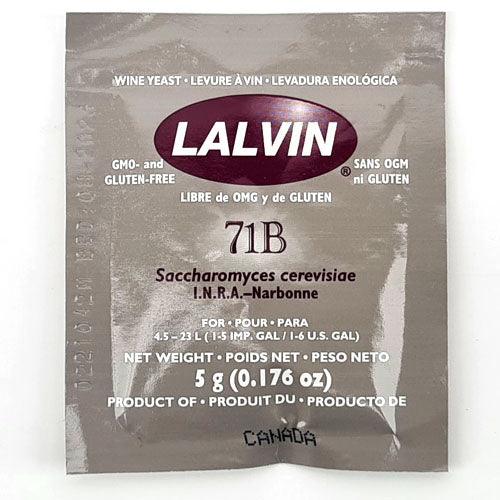


Lalvin 71B-1122 Wine Yeast – 5g (Nouveau / White / Red Wine)
$6.00
Fruity wine yeast with “fruit salad” aromas. Great for fresh, early-drinking whites and reds. 5g sachet.
In stock
Lalvin 71B-1122 gives wine a fruity, “fruit salad” aroma, with banana and pear notes. It’s ideal for fresh, fruity Nouveau-style wines, and it brings out more fruit character in neutral grape varieties.
It absorbs some of the polyphenols that give red wine its tannin, which makes it a good fit for soft, fruity reds made to drink young. Its low nitrogen demand and low production of H2S and SO2 also make it well suited to preservative-free wines.
Specifications
- Sachet size: 5g
- Best for: Nouveau-style, white, rosé and early-drinking red wines
- Dose: 25–40g per 100L, depending on the sugar content and condition of the grapes. One sachet treats roughly 12–20L.
Technical properties
- Strain: Saccharomyces cerevisiae cerevisiae
- Killer factor: sensitive (K2)
- Alcohol tolerance: up to 14%
- Fermentation temperature: 15–30°C
- Lag phase: short
- Fermentation rate: moderate
- Urea production: very low
- Nitrogen requirement: very low
- Survival factor requirement: high in oxygen-poor musts
- Amyl ester (fruity aroma) production: high
- Volatile acidity: average
- SO2 production: low
- Helps malolactic fermentation
How to use
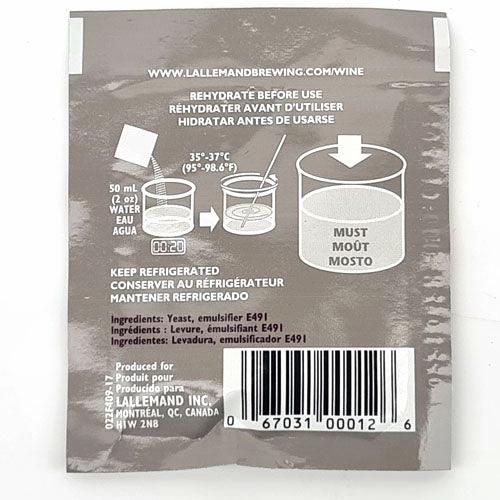
- Sprinkle the yeast into 5 times its weight of clean water at 40°C (25ml for a 5g sachet).
- Leave for at least 20 minutes, stirring gently now and then to break up any clumps.
- Add to the must.
Tips: Keep the total rehydration time under 45 minutes. Make sure the must is no more than 10°C cooler than the rehydrated yeast, so the yeast isn’t cold-shocked. Always rehydrate in a clean container, and don’t rehydrate the yeast directly in the must.
Downloads
Related products


Brewing Salts & Water Treatment

Extract Kits and Brewing Sugars

Extract Kits and Brewing Sugars

Brewing Aids

Extract Kits and Brewing Sugars


Accessories


Brewing Salts & Water Treatment

Brewing Aids